How to choose the right fan
With dozens of fan types available, here are the key things to consider before buying:
Tower fans vs pedestal fans vs desk fans
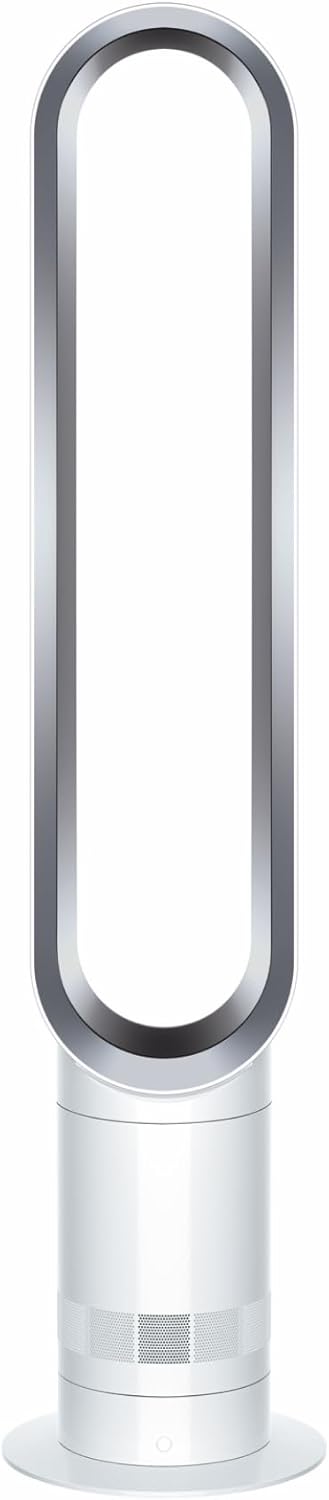
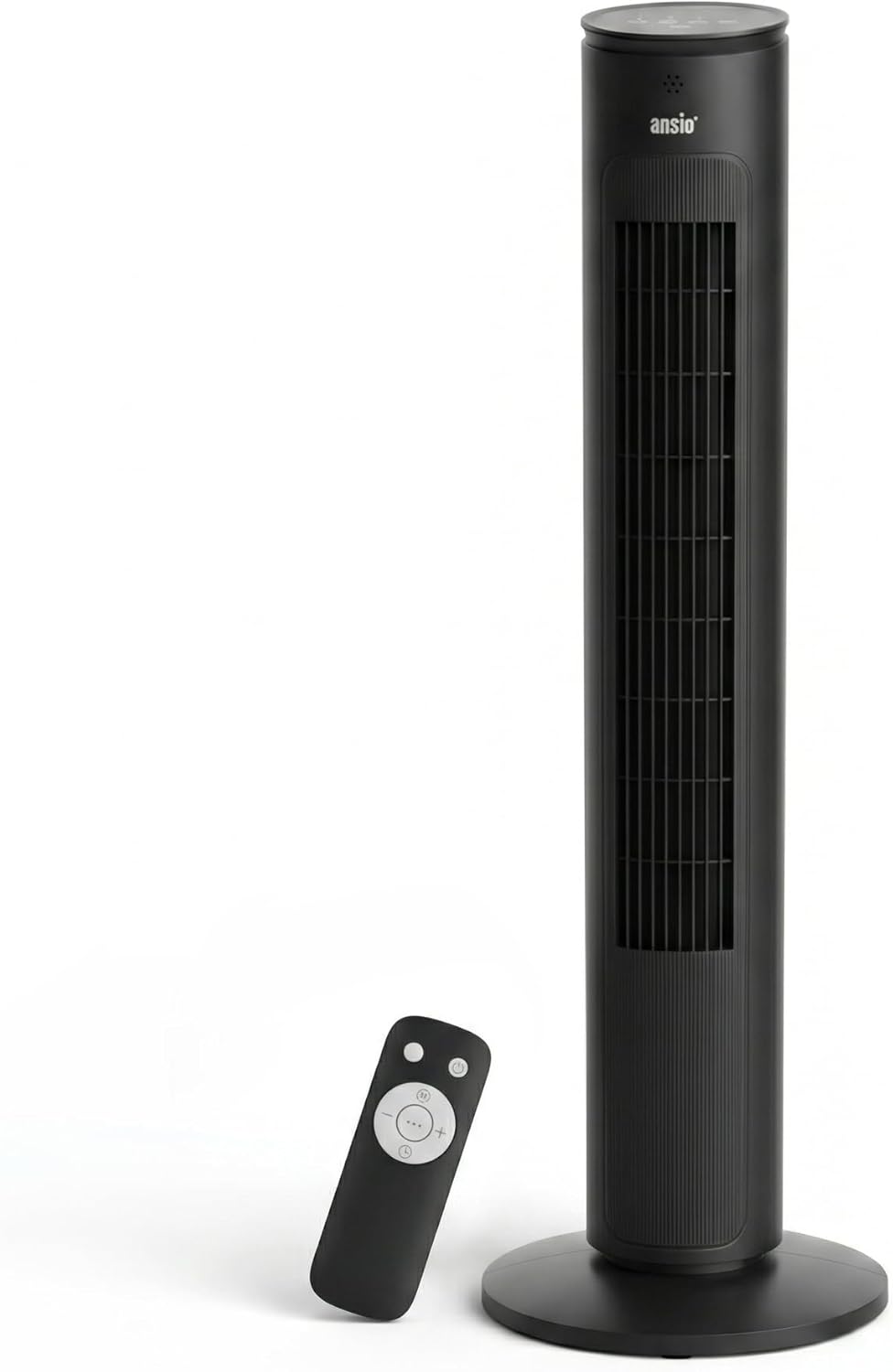
- Tower fans are space-efficient and good for living rooms and bedrooms. They tend to oscillate well and many come with timers.
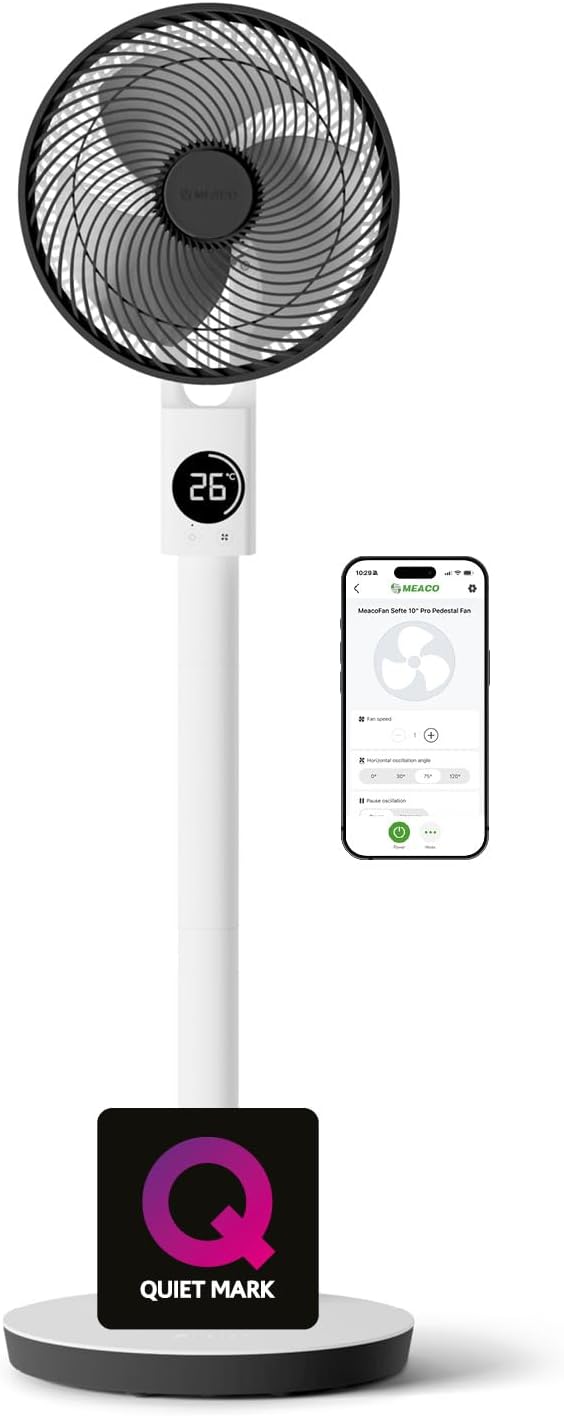
- Pedestal fans are adjustable in height and often more powerful. Good for larger rooms where you need directed airflow.
- Desk fans are small and portable — ideal for home offices or adding a gentle breeze at close range.
Noise levels — what to look for
Noise is measured in decibels (dB). For bedroom use, look for fans rated below 40dB on their lowest setting. Many DC motor fans, like the MeacoFan Sefte Pro 10, are significantly quieter than AC motor equivalents.
Energy efficiency
DC motor fans use considerably less electricity than AC motors — often 70–80% less. Over a summer, this can save a meaningful amount. See our fan running cost calculator to work out exactly how much your fan costs to run.
Fan buying FAQ
Do fans actually cool the air?
No — fans don't reduce air temperature. They create a cooling effect by helping your skin evaporate sweat more quickly. This is why fans feel less effective in very humid conditions, and why they don't cool an empty room.
Should I leave a fan on all night?
A good quality fan with a sleep timer is fine to run overnight. Look for a fan with a quiet sleep mode. Running a fan overnight at 30W for 8 hours costs roughly 7–8p at average UK electricity rates.
What is the best fan for a hot bedroom?
For bedrooms, prioritise noise level above everything else. The MeacoFan Sefte Pro 10 and Dyson AM07 are widely regarded as two of the quietest options available in the UK. See also: How to keep your bedroom cool.
How much does a fan cost to run overnight?
A 30W fan running for 8 hours uses 0.24kWh. At 28p/kWh, that costs about 7p per night. Use the fan running cost calculator for your exact wattage and tariff.